Biover Labs · September 17, 2026 · 3 min read
Updated October 24, 2026
What Is Cold-Chain Shipping for Research Peptides?
A peptide can be perfectly synthesized and still arrive degraded — if the shipping wasn't handled right. Here's what cold-chain shipping actually involves, and why it matters before the vial ever reaches a lab bench.
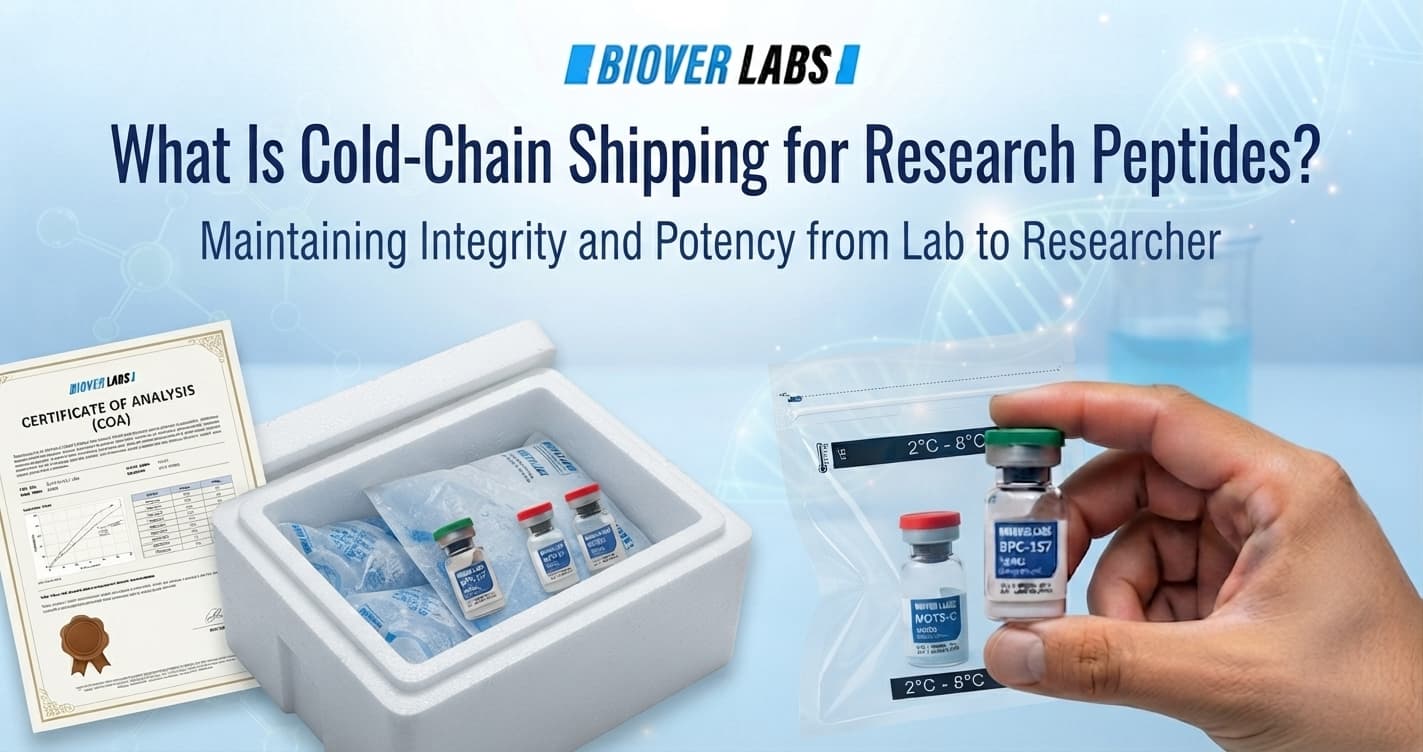
Cold-chain shipping refers to keeping a temperature-sensitive product within a specific temperature range continuously, from the moment it leaves a facility to the moment it arrives — no gaps, no long stretches sitting in a hot delivery truck or a warm mailroom. For research peptides, this isn't a nice-to-have. Purity and identity testing mean very little if the vial degrades in transit before it ever reaches a lab bench.
Why Peptides Are Temperature-Sensitive
Lyophilized (freeze-dried) peptides are considerably more stable than reconstituted ones, but "stable" doesn't mean "indifferent to conditions." Heat accelerates the same degradation pathways that affect any peptide in solution — and even in dry powder form, sustained high temperatures can degrade certain sequences over time, particularly ones with side chains prone to oxidation.
The risk is highest during shipping, where a package might sit in a hot delivery vehicle, an outdoor package box, or an un-air-conditioned warehouse for hours before reaching its destination. A single hot afternoon in transit can undo a lot of otherwise careful manufacturing and testing.
What Proper Cold-Chain Packaging Looks Like
A well-handled cold-chain shipment typically includes:
- Insulated packaging — foam or thermal-lined boxes designed to slow heat transfer from the outside environment
- Ice packs or gel packs — sized appropriately for the shipping duration and expected external temperature, not just tossed in as an afterthought
- Temperature indicators (on more rigorous shipments) — a strip or card that changes color if the package exceeded a safe temperature threshold at any point
- Expedited shipping methods — minimizing total transit time reduces the window during which temperature control can fail
The goal across all of this is the same: keep the internal package temperature low and stable, regardless of what's happening outside the box.
What to Check When a Shipment Arrives
A few quick checks are worth doing as soon as a peptide shipment arrives, before the vials go into storage:
- Check the packaging — were ice packs still cold or at least partially frozen on arrival? Fully melted, warm packs suggest the shipment may have spent extended time at elevated temperature.
- Check for a temperature indicator, if the shipment included one, and confirm it hasn't been triggered.
- Inspect the vials themselves — a lyophilized peptide should still look like a dry, intact cake. Visible moisture, an unusual color change, or a collapsed/liquefied appearance can indicate heat exposure or a compromised seal.
- Move vials to proper storage immediately — refrigeration or freezer storage, depending on the specific compound — rather than leaving them at room temperature "just for a bit."
Why This Matters as Much as the COA
It's easy to focus entirely on purity percentages and Certificates of Analysis when evaluating a supplier, and those documents matter. But a COA only describes the peptide's condition at the moment of testing — not necessarily its condition after several days in transit. A supplier that tests rigorously but ships carelessly can still hand you a degraded product. Reliable cold-chain practices are what make that COA still mean something by the time the vial reaches you.
This is also one of the practical advantages of working with a domestic, USA-based supplier: shorter transit times within the country mean less time in transit overall, and fewer opportunities for a package to sit somewhere hot along the way.
The Bottom Line
Cold-chain shipping is the practice of keeping temperature-sensitive materials within a safe range for the entire trip from supplier to buyer, using insulated packaging, appropriately sized ice packs, and fast transit times. It's easy to overlook next to purity percentages and lab reports, but it's just as important — a perfectly tested peptide that spends a hot afternoon in a delivery truck isn't the same product anymore by the time it arrives.
